The Night We Noticed
After changes in plans and lots of planning we decided to try some Astro Photography at Redfish Lake. My friend had been looking for a good reflection location for Milky Way photography, and Redfish Lake was high on her list.
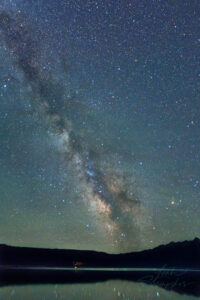
We arrived late in the afternoon on July 9, giving us time to find our preferred spot on the beach and get a little sleep before sunset. On the night of July 9–10, we spent several hours photographing the Milky Way from the dog beach near Redfish Lake Lodge. We arrived around 10:30 p.m. and stayed until nearly 3:00 a.m., watching the sky change as the night progressed.
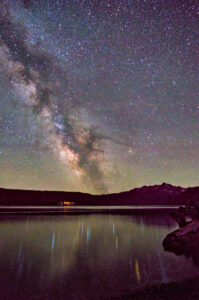
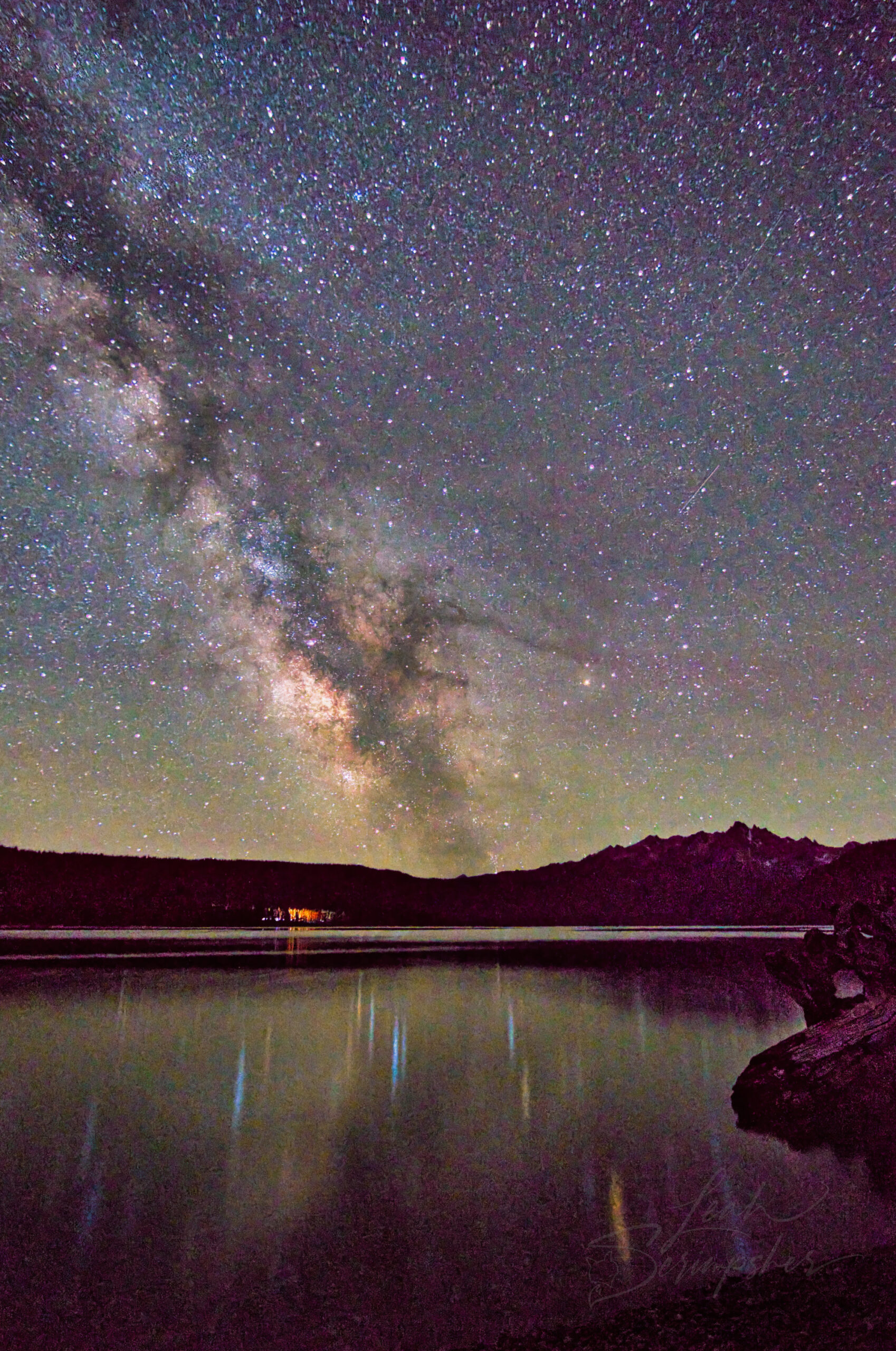
Redfish Lake is located within the Central Idaho Dark Sky Reserve, making it one of the best places in Idaho to experience the night sky. Aside from a few campground lights across the lake and some glow from the lodge beyond the edge of the frame, the scene was remarkably dark. We were able to see the Milky Way clearly with our naked eyes. Grand Mogul stood in silhouette on the right side of the lake while the Milky Way stretched overhead.
At first, something seemed wrong.
As I reviewed images on the back of the camera, I noticed a faint green glow rising above the horizon. My first thought was that I had accidentally introduced some strange color cast or camera issue. That explanation quickly fell apart when the same green glow appeared on images from two different cameras using two different lenses. My friend also noticed the glow on both of her cameras and her cellphone images.
One of my cameras was fitted with a fisheye lens, which allowed me to include more of the Milky Way across the sky. The other used a Tokina lens for a composition that included both the Milky Way and its reflection in the lake. Both cameras showed the same green wave reaching well above the horizon.
The more we looked, the harder it became to ignore the obvious answer. The cameras were recording aurora activity that our eyes couldn’t detect. What initially appeared to be a problem with the equipment was actually an unexpected visitor in the night sky.
The photographs became more than Milky Way images. They documented the moment we realized something unusual was happening above Redfish Lake.
It wasn’t until I began processing the images that I became even more convinced we had photographed an aurora display. Alongside the green glow were faint bands of pink and magenta that became more apparent as the files were edited. Finding those colors in images from multiple cameras provided additional confirmation that what we had recorded was more than a simple color cast or camera artifact. Could we still be mistaken? Maybe. But much like a good Bigfoot story, I’m inclined to believe what I saw.
One of the things I enjoy most about night photography is that the camera often reveals details hidden from the human eye. On this night, it revealed something neither of us expected to find.